

Bringing the Ganga
back to Jhabua’s hills
Every summer, thousands of Bhil villagers revive Halma — an old tribal custom of turning up unpaid for a neighbour in need — and dig the hillsides so the monsoon stays where it falls. Water returns, farms revive, and families stop boarding the migration trains.
 Padma Shri, 2019
Awarded to our founder Shri Mahesh Sharma
Padma Shri, 2019
Awarded to our founder Shri Mahesh Sharma
A movement built on self‑respect, not charity
Shivganga Samagra Gramvikas Parishad is a voluntary non‑profit working for holistic rural development with the Bhil community of Jhabua. It began in 1998, when Mahesh Sharma spent five years walking village to village — and found a community of the highest human values being told it was backward.
In 2005 the first youth camp was held. The pain the young men named was water. So the movement took its name from Raja Bhagirath, who brought the Ganga down to earth — and Jhabua set out to bring its own Ganga to Jamee Mata.
Six programs, one village at a time
Every program sits on one of the five resources — people, water, forest, farmland and livestock — and every one of them is run by the village itself.
Water Conservation
Talabs, bori bandhan, hand‑pump recharge and 2,09,050 contour trenches — every site chosen by villagers trained as gram engineers.
Learn moreForest Enrichment
Replanting the barren hills that let the monsoon run straight off them, protecting regrowth, and filing Community Forest Rights claims.
Learn moreSocial Leadership
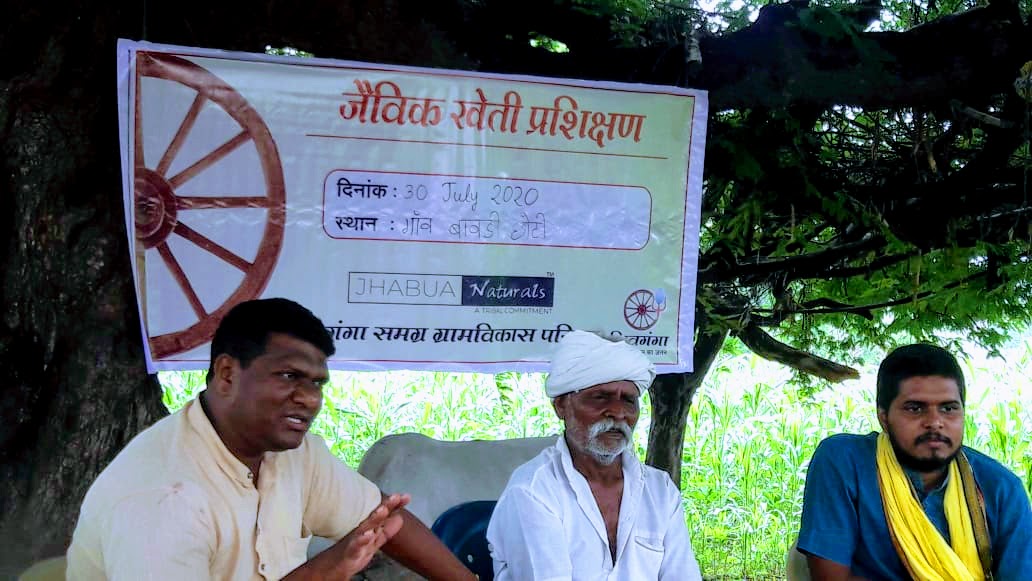
Vananchal youth camps have trained 15,000+ Parmarthis to think for their village first — and earn the standing to lead it.
Learn moreEnterprise & Livelihood
Jhabua Crafts and Jhabua Naturals — village ventures run by tribal entrepreneurs, not for them.
Learn moreWomen’s Leadership
Women carry the water crisis on their backs and the Halma on their shoulders. Here they lead their own councils and enterprises.
Learn moreConnecting Communities
City and village in the same room: students from the IITs, IIMs and TISS come to live the reality, not read the report.
Learn more20,000 people. One hill. Nobody paid a rupee.
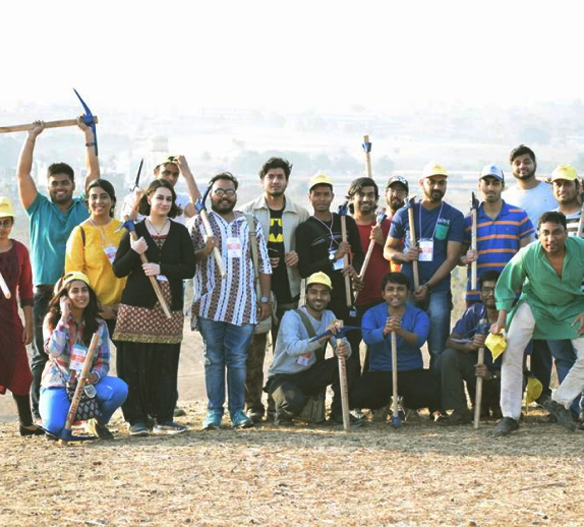
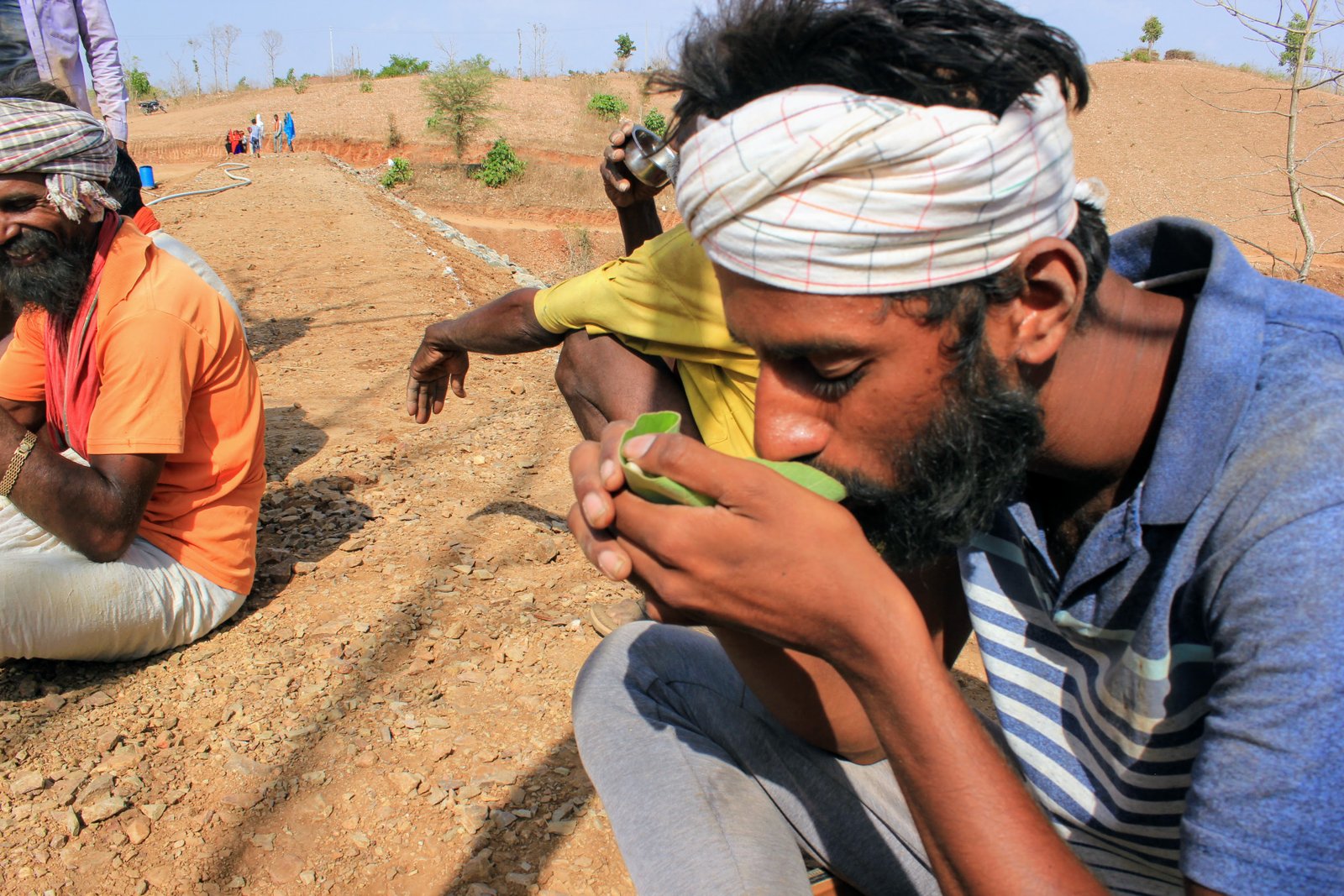
Traditionally, Halma was how a village rescued one household in trouble — everyone came, nobody was paid. Shivganga asked the community to call a Halma for the earth instead. They arrive with geti, phawda and tagari, climb Hathipawa hill before dawn, and dig.
In 2020, over 20,000 people came from more than 500 villages. 40,000 trenches were dug in a single morning — enough to hold an estimated 360 crore litres over five years.
Counted in structures, not slogans
Everything below was built by villagers, on land they own, at a fraction of contracted cost.
Holding 481.43 crore litres. Sites picked each summer during gram engineering training.
Cut across the barren hills so rain percolates instead of running off. Called Shankar’s jata locally.
Repaired and newly built — hand‑pump recharge pits, bori bandhan, gully plugs.
In Kheda village: 6,320 m of earthen field bund, 965 m of stone bunding, two farm ponds.
100 horticulture and 400 agroforestry saplings, planted where the water now stays.
Families once took a single rain‑fed crop and left for the cities after it. Where the water stayed, the family stayed too.
Give every month. Compound the change.
Halma itself is free labour. Training camps, gram engineering, seed material and the fellows who hold it all together are not. A regular monthly gift is what lets Shivganga commit to a village for years instead of a season.
Mock‑up note: the allocation described for each amount is illustrative — replace with verified unit costs before publishing.
What others say about the work
Unlike others, Shivganga is neither pushing Aadivasi backwards because they are illiterate, nor showing them upfront because they’re illiterate. They are simply making them realise their energy… so that they themselves can move forward.
Shivganga makes use of the tribals’ own cultural resources to motivate them to develop. It is one of the more successful among tribal development schemes.
Young Volunteer Organization is proud to be associated with Shivganga. We salute the spirit of these entrepreneurs who have put their hearts into developing 1,300 tribal villages — our donations have impacted over 480 lives.
Awards & recognition
To founder Shri Mahesh Sharma, for empowering tribal rural Madhya Pradesh.
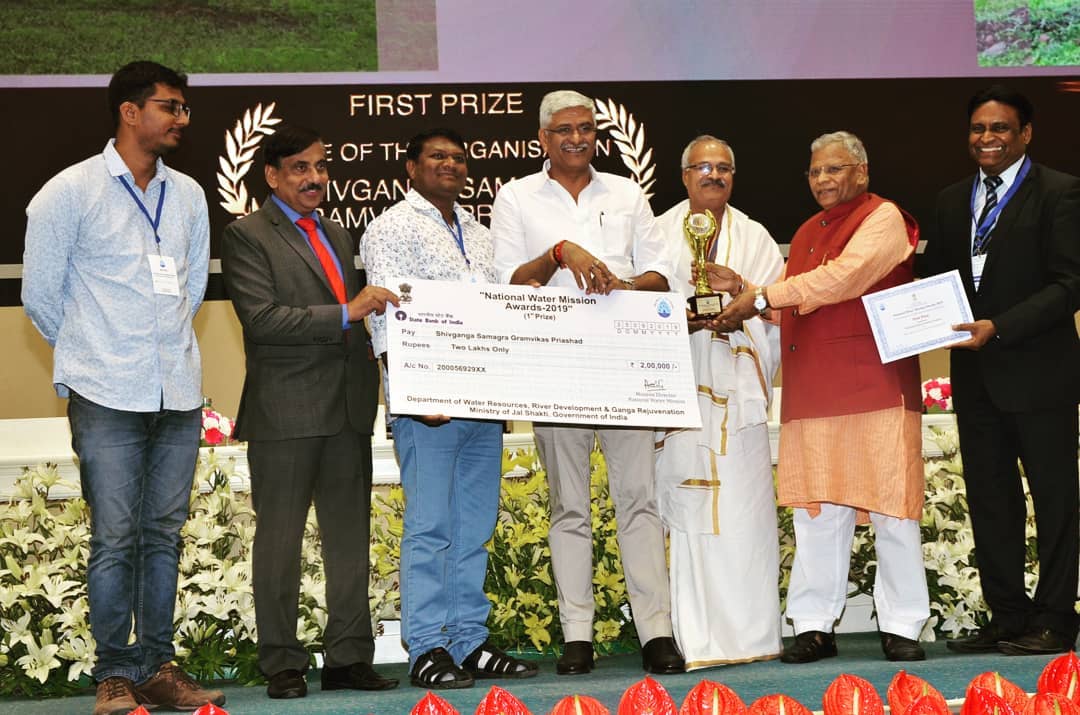
Ministry of Jal Shakti, for focused attention to over‑exploited areas.
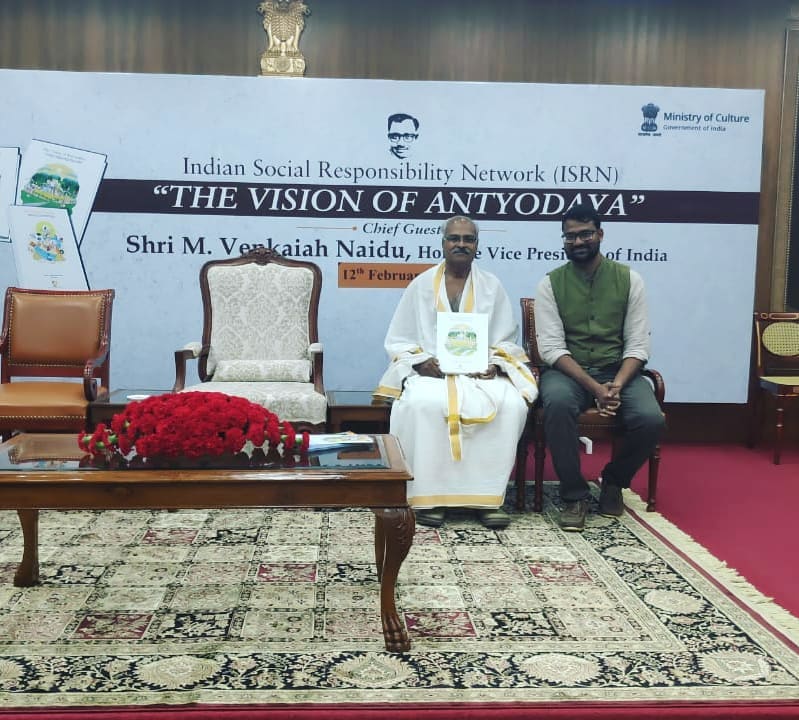
One of 408 ground‑level practices in the volume launched at Rashtrapati Bhavan.

Lions Club New Delhi Alaknanda, major NGO category.
Come and see. Most people stay longer than planned.
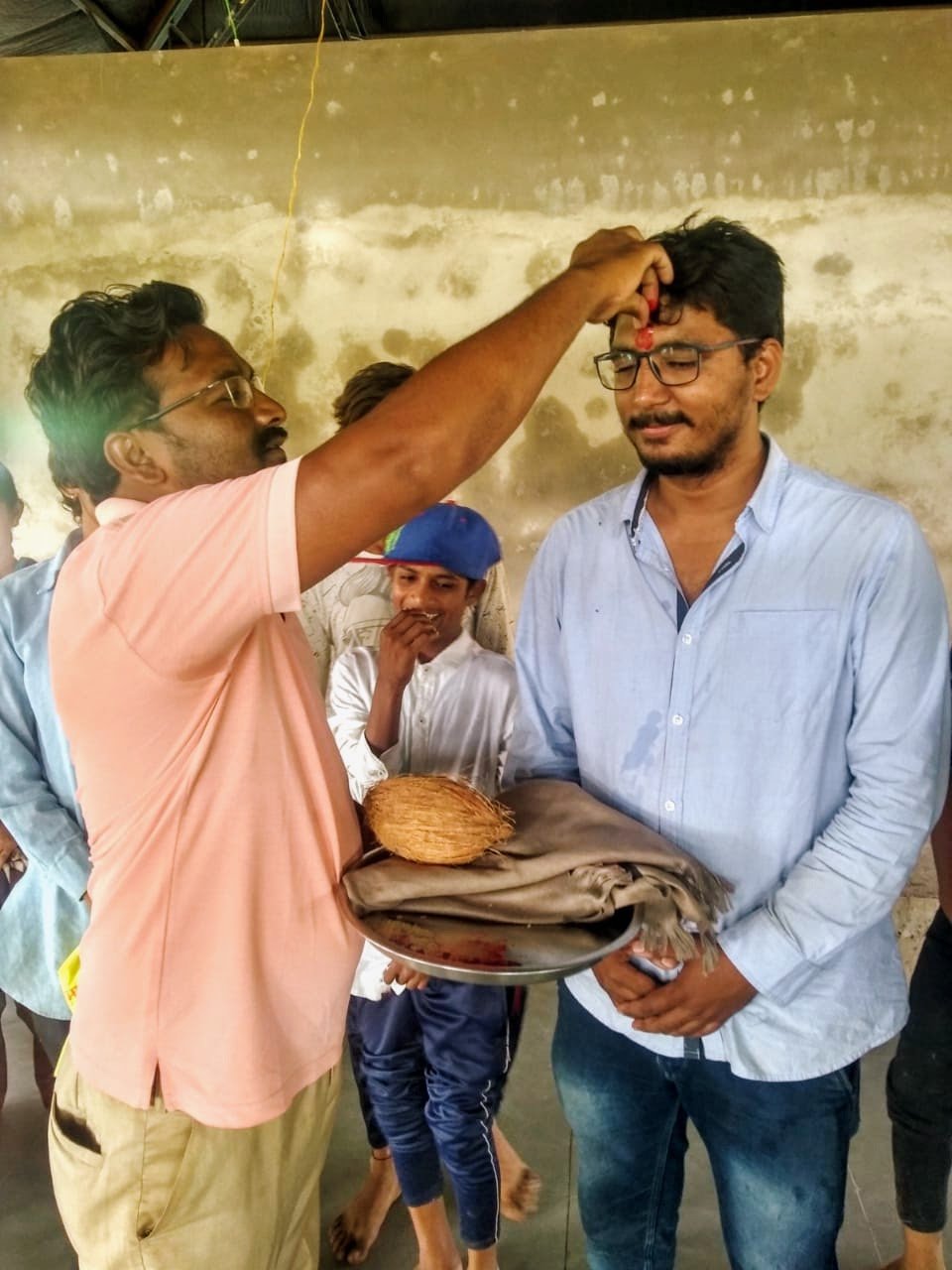
Hundreds of students from the IITs, IIMs, TISS and NITIE visit Jhabua every year. Some never quite leave.
Visit Jhabua
A few days living in a village — not a field trip. Come during Halma and you will dig alongside everyone else.
Plan a visitInternship
Six to eight weeks on a live project — water, forest rights, rural enterprise or communication design.
Apply nowTwo‑year fellowship
Live in Jhabua and own a project outright. This is how Jhabua Naturals and the rural tech lab began.
Read the terms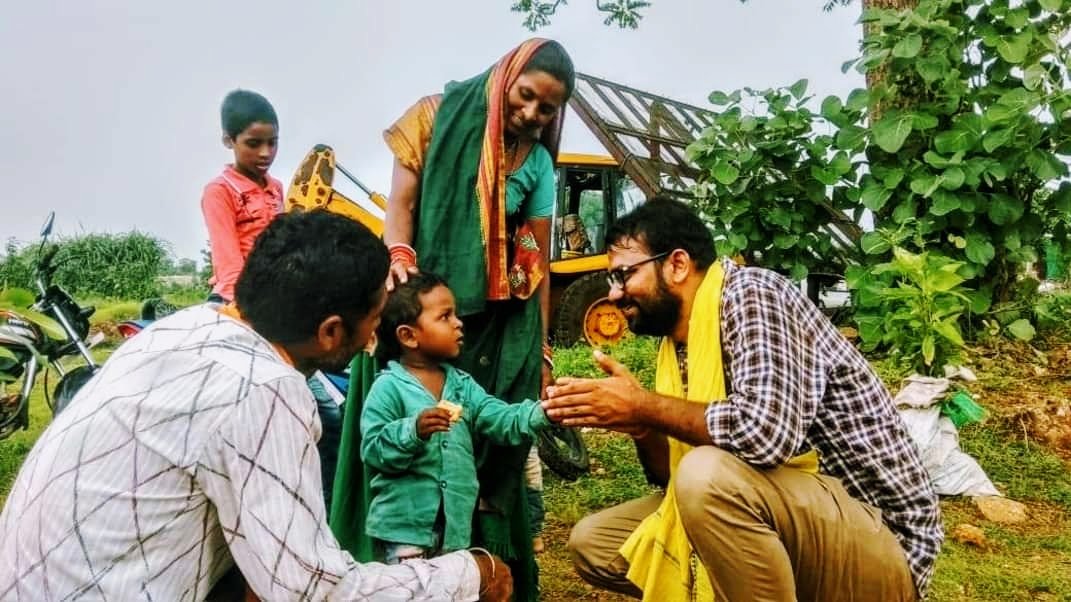

The village will do the digging. Fund the pickaxe.
₹500 a month keeps one young Parmarthi in training for a year. Twelve months of that becomes a village that no longer needs us.